
So you want to be a fighter? Follow these 3 simple steps on how to train to be a fighter. We present the fundamentals required to be successful. It’s not easy so strap in. These basic steps work for all forms of combat. Boxing, Muay Thai, MMA.
How to to train to be a fighter
1 – Sleep!

Sounds counter productive right? You want to get right at it and that’s great! However, without a good sleep schedule you are setting yourself up to fail. Injuries, fatigue and desire all take an impact. You are not your best self when operating on a lack of sleep. It is the single most important thing to get right with any aspiring fighters.
Below are a list of factors effected by a lack of sleep.
- Inhibited ability. In a study of male team-sport athletes who were sleep-deprived, average and total sprint times decreased.
- Decreased accuracy. After sleep deprivation, male and female tennis players had decreased serve accuracy of up to 53% when compared to performance after normal sleep.
- Quicker exhaustion. In a study of male runners and volleyball players, both groups of athletes exhausted faster after sleep deprivation.
- Decreased reaction time. A lack of sleep adversely affected reaction time in a studied group of male collegiate athletes.
- Difficulty learning and decision making. Executive functions are impacted by a lack of sleep. Choices such as passing the ball or taking it to the net yourself can be more difficult or made too late.
- Risk for injury. Research of middle and high school athletes revealed that a chronic lack of sleep is associated with increased rates of injury.
- Risk for illness or immunosuppression. Poor sleep habits are associated with lower resistance to illness, such as the common cold.
How to to train to be a fighter
2 – Diet

Immediately after sleep in the order of importance comes diet. We’ve not thrown a single punch yet but bare with me it will come! Diet is different for everyone and you need to figure out what works for you. However, there is some basic rules to work to.
If you are looking to cut weight fast reduce carbohydrates and increase fats and protein. (keto diet) This encourages the body to burn fats as fuel rather than carbs and as a result you can loose a lot of weight very fast. This however isn’t optimal for a fight but is often used after a long break away from training.
As you come close to the weight you want to fight at it is important to have the correct nutrition to improve performance. Vitamins are now considered one of the cheapest and most convenient ways to achieve the correct level of nutrition. Once you have your nutrients in order your only focus is macros. 23.5/23.5/53 (proteins carbs & fats) is the recommended levels.
Hydration levels must not be ignored also. 4 liters a day on training days is recommended and sounds a lot but trust me it’s required! If not correctly hydrated you could experience a 45% drop in performance! Drink that water.
How to to train to be a fighter
3 – Training routine
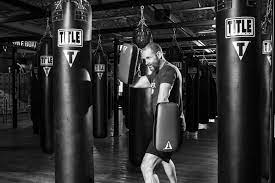
Finally we’re ready to put the real work in. First things first roadwork. Roadwork sets the day up right. Most fighters do this first thing (around 6am) – 3 miles at a pace of around 6pmh. Eat the frog get it done. Nobody likes to run.
Stretch, shower up and its time for breakfast. (remember to follow the plan listed previously)
Most people may be working a job/in school full time so ensure you get roadwork and drills in 6 days (as a minimum!)
If you are lucky enough to dedicate all your time to training you should be aiming at 5 hours of work a day.
You should be splitting your training time into –
- Strength training – Deadlifts, kettlebell swings etc..
- Condition training – Skipping, mountain climbers etc..
- Technique – Bag & pad work, sparring etc.
Do not forget!
Sparring should not be done more than twice a week and 16oz. gloves with headguard should always be used. You get nowhere acting tough in training other than shortening your career and life.
Never overlook skipping it’s probably the best cardio workout you can get and you can do it anywhere. You are able to burn up to 500 calories in just a 15 minutes session on the rope. Which can definitely help after a break shifting those extra lbs.
Don’t forget to stretch! a lot of people don’t that doesn’t mean you shouldn’t. With flexibility comes strength and massively reduces your chance of injury and reduces muscle soreness.
Everybody’s training routine will look different but this is a good place to start. Lean into your weakness eg. You have poor cardio – spend more time working on conditioning and sparring rather than strength.
If you follow these simple guidelines on how to train to be a fighter you can’t go far wrong. Gyms are a great place to meet friends and you will naturally motivate each other to be the best you can be.
Please check out our other content.