
Many people starting boxing often ask themselves what size boxing gloves do I need? Below is a simple, easy to use tool to make it easy to find exactly what size gloves to use for sparring, bags and pads.
Simple boxing glove size guide:
Boxing Glove Size Recommender
Get a quick glove weight (oz) recommendation for bag work, pads, sparring, or amateur bouts. This tool uses common gym boxing fundamentals — always defer to your coach and sanctioning rules.
Recommended Glove: 12 oz
Range: 10 – 14 oz
Always remember to only use quality boxing gear. It can be attractive to look for cheap gear or fake brands. You only get one set of hands, protect them.
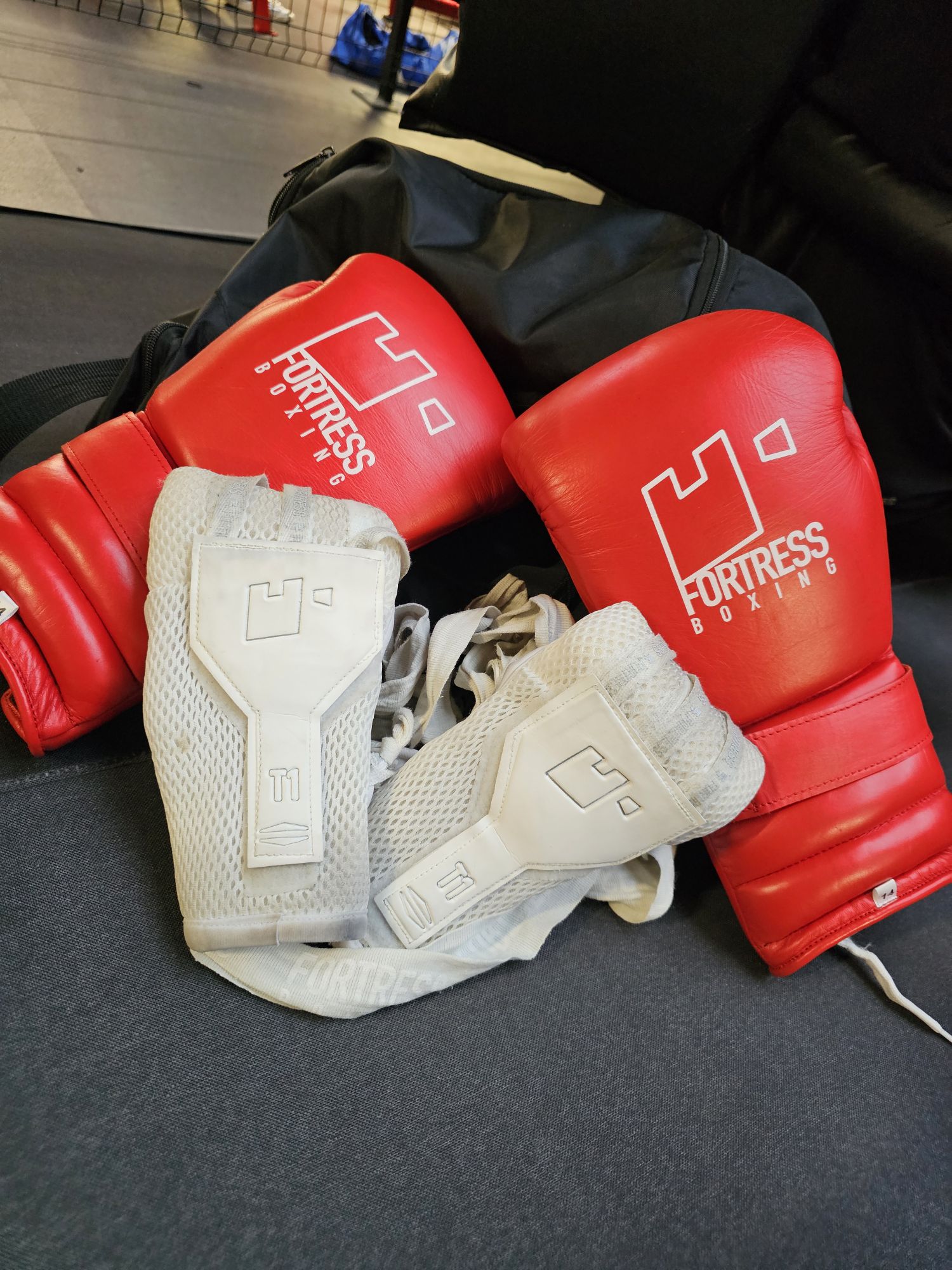
Typically, the bigger or heavier the boxer, the larger the gloves they tend to use. Glove size is measured in ounces (oz), and the extra padding in heavier gloves is crucial for sparring. It cushions the impact, not just for the boxer throwing the punches, but also for the person on the receiving end. In a full-contact session, the repeated strikes can add up, and without sufficient padding, the risk of injury goes up significantly.
Some boxers choose to train exclusively in heavier gloves, such as 16oz, even if they plan to fight in lighter gloves, usually around 8–10oz. The reasoning is simple: by training with extra padding, punches feel faster and more powerful when the gloves are switched to a lighter pair for a fight. It’s a technique used by many fighters to develop speed, precision, and hand strength. However, it’s not without its downsides. Training only in heavier gloves can alter defensive habits. The way you block, parry, or keep your hands up can feel different when you switch to smaller gloves, and some boxers notice their defence feels a little slower at first. Over time, though, with consistent training, the adjustment becomes second nature.
What determines boxing gloves size?
Glove weight isn’t determined by size alone. Your experience, the type of training, and the intensity of your session all play a part. Beginners often benefit from slightly heavier gloves, as they help protect developing hands and wrists and also reduce the risk of hurting a training partner. More experienced boxers might look for a glove weight that strikes a balance between protection and speed, allowing for sharp, precise punches while still offering enough cushioning.
Different types of training call for different gloves. Bag work and pad work usually require lighter gloves. You’re not hitting a person, so protection isn’t as big an issue, and lighter gloves allow for faster movement and better technique. Sparring and amateur bouts, on the other hand, demand heavier gloves to protect both fighters. Coaches will often adjust glove weight depending on the intensity of the session, your weight, and your overall experience, aiming for a balance between safety and performance.
For younger or junior boxers, glove choice is especially important. Kids and teenagers are still growing, and their hands are more susceptible to injury. Using gloves with enough padding is key, and they should also fit properly to support wrist stability. Trainers will usually recommend gloves that offer both protection and a comfortable fit, so young athletes can learn correct technique safely.
In short, choosing the right glove is about more than just size. Heavier gloves are great for sparring and protection, while lighter gloves help with speed and feel in competition. Boxers and coaches need to consider weight, experience, training type, and long-term goals. Understanding the relationship between glove weight, protection, and performance allows fighters to train effectively, stay safe, and get the most out of every session.